
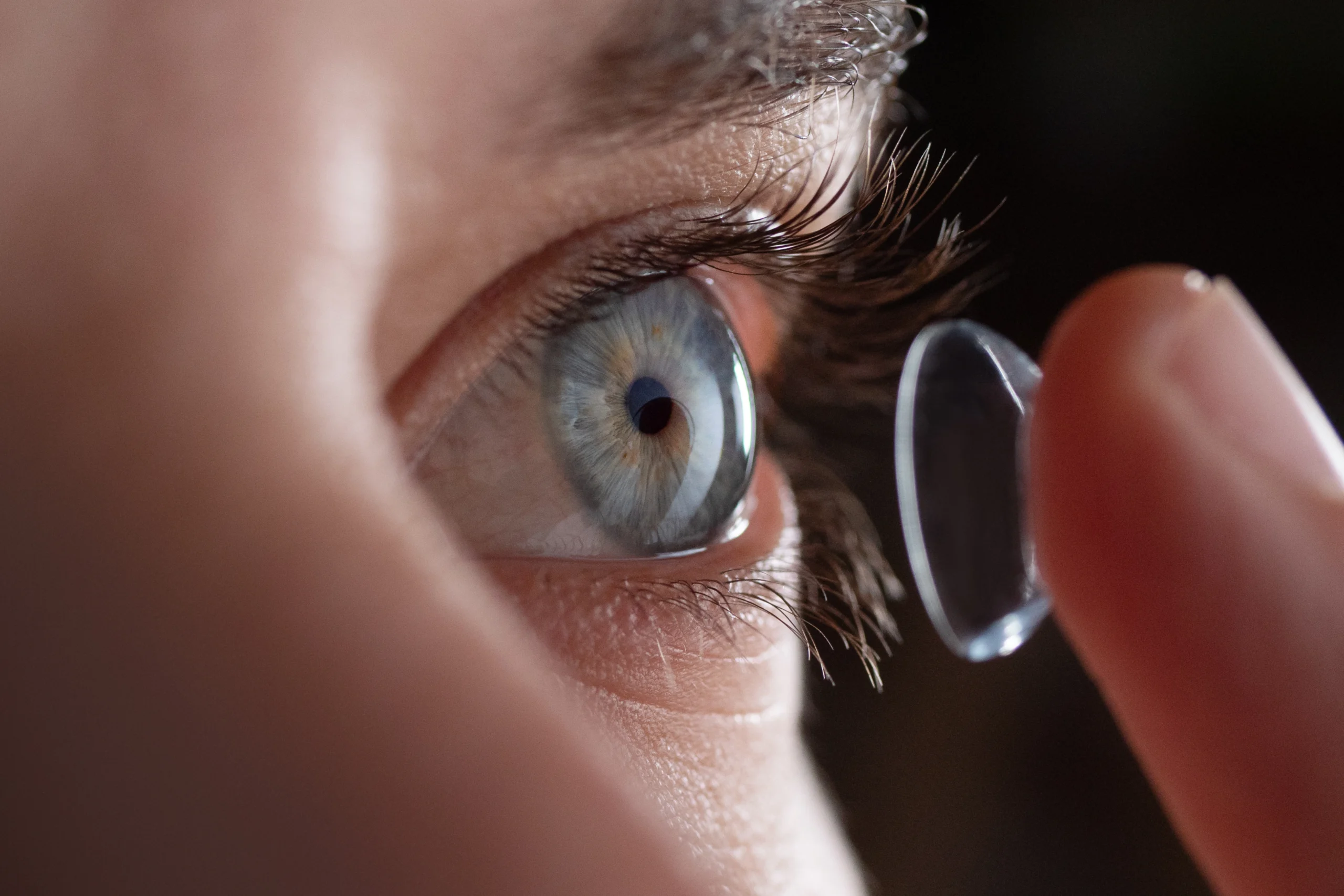
Contacts are supposed to make life easier: clearer vision, less hassle, more freedom. In most cases, blurry contact lens vision has a clear cause which can be uncovered with a contact lens exam and a few targeted tweaks.
Let’s walk through the most common reasons contacts get blurry, plus what you can do next.
Common causes of blurry vision with contacts
Blurry vision can show up in one eye, both eyes, only at night, or only after a few hours of wear. Those patterns matter because they point to different culprits.
Here are the most frequent ones:
- Dry eyes: Your contacts rely on a healthy tear film. If your eyes dry out, the lens surface can dehydrate, and your vision can fluctuate, especially later in the day or after screen time.
- Lens deposits and buildup: Protein, oils, makeup, and environmental debris can cling to lenses and create a foggy, filmy look.
- Wrong prescription or lens fit: Even small prescription changes (or a lens that rotates or sits oddly) can blur vision and cause eye strain.
- Astigmatism that isn’t fully corrected: If you have astigmatism, you may need a toric lens design. If the lens isn’t stabilizing well, vision may sharpen and blur as it moves.
- Wearing lenses past their replacement schedule: “Just a few extra days” often turns into chronic blur, dryness, and irritation.
- Allergies or inflammation: Seasonal allergies can swell tissues and change how a lens interacts with the eye, which affects clarity.
- Sleeping in contacts (even occasionally): Overnight wear reduces oxygen and can trigger swelling, dryness, or infection risk, each of which can blur vision.
Solutions that can help blurry vision
The right solution depends on why things are blurry. In a contact lens evaluation, we can look at tear quality, corneal health, lens movement, and prescription accuracy.
Common fixes include:
- Adjusting the contact lens brand or material to improve moisture and oxygen flow
- Changing your replacement schedule
- Updating your prescription
- Treating dry eye with a personalized plan that may include lid hygiene, targeted drops, or other in-office recommendations
- Refitting for astigmatism so toric lenses stabilize more reliably
For some patients, standard soft lenses just aren’t the best tool. That’s where specialty contact lenses can help, especially for irregular corneas, higher prescriptions, keratoconus, post-surgical eyes, or chronic dryness.
When blurry contacts are a focusing or teaming issue
Sometimes the contact lens itself isn’t the main issue. If your vision is clear at first but gets fuzzy with reading, screens, or switching distances, your eyes may be struggling with focusing flexibility or coordination.
This is where vision therapy may be recommended. It’s a structured program designed to improve how the eyes and brain work together, often helpful for:
- Fatigue with near work
- Blur that worsens during reading or computer use
- Headaches or trouble shifting focus from near to far
- Inconsistent clarity that doesn’t match the prescription findings
Not every blurry-vision case needs therapy, but for the right person it can reduce strain and make vision feel more stable day to day.
Clear vision you can count on
You shouldn’t have to guess why your contacts are blurry or keep “toughing it out” through haze, dryness, or fluctuating focus. A thorough contact lens exam can pinpoint what’s changing your clarity and match you with a lens (or treatment plan) that fits your eyes and your routine.
Ready to get to the bottom of your blurry vision with contacts? Schedule an appointment with Primary EyeCare Associates in Sidney, Fort Loramie, or Troy, and let’s get you back to crisp, comfortable vision.