
Fort Loramie, Sidney, & Troy, OH
Trusted Dry Eye Specialists
Find relief from dry, itchy, and irritated eyes
Dry eye may seem like a minor nuisance. However, if left untreated, it can lead to serious long-term complications that affect your eye health and vision. This condition can make your eyes feel gritty, like sand is in them, and can even lead to blurry vision.
At Primary EyeCare Associates, our dry eye specialists in Sidney, Fort Loramie, and Troy provide targeted treatments to address the specific causes of your symptoms and help prevent further issues.

What is dry eye disease?
Dry eye occurs when your eyes don’t produce enough tears or the right kind of tears to keep them moist and comfortable.¹ Tears are essential for maintaining optimal eye health and clear vision. When your eyes don’t produce tears properly or if the tear film becomes unstable, it can lead to a condition known as dry eye disease or dry eye syndrome.
Dry eye disease can be a chronic and painful condition. Fortunately, eye care professionals can prescribe treatment to keep your eyes healthy and comfortable and prevent permanent damage to the surface of your eyes.

Common dry eye symptoms
People with dry eye may experience a range of symptoms, including²:
- Stinging or burning eyes
- A scratchy or sandy feeling in your eyes
- Watery eyes (your body’s way of responding to dryness)
- Light sensitivity
- Eye pain or redness
- Stringy mucus or discharge
- Fluctuating vision
- Difficulty wearing contact lenses
Causes of dry eyes
Dry eye can occur for a number of reasons, such as:
- Meibomian gland dysfunction (MGD), which disrupts tear film balance
- Aging, particularly over age 40
- Environmental factors like smoke, wind, or dry air
- Extended screen time
- Certain medications, such as antihistamines and antidepressants
- Medical conditions like autoimmune diseases, diabetes, and thyroid disorders
- Side effects from LASIK or cataract surgery
- Hormonal changes from pregnancy, menopause, or birth control
- Contact lens wear
How is dry eye disease diagnosed?
Our dry eye doctors can check for dry eye as part of your comprehensive eye exam. They’ll assess how many tears your eyes produce and how quickly those tears evaporate, as well as examine the health of your eyelids and the surface of your eyes.
Beyond the physical signs, we also consider factors like your lifestyle, environmental factors, and overall health. For example, if you work at a computer all day, this can cause you to blink less often and lead to dry eye. Alternatively, a windy environment, air pollution, a dry climate, or a medical condition or medication could be contributing to symptoms.³ Understanding any potential causes will help us decide on the best treatment approach.
Dry eye treatment options
Once we’ve identified the root cause of your dry eyes, our optometrist will develop a customized treatment plan to address the issue. Our treatment options include:
IPL with LLLT
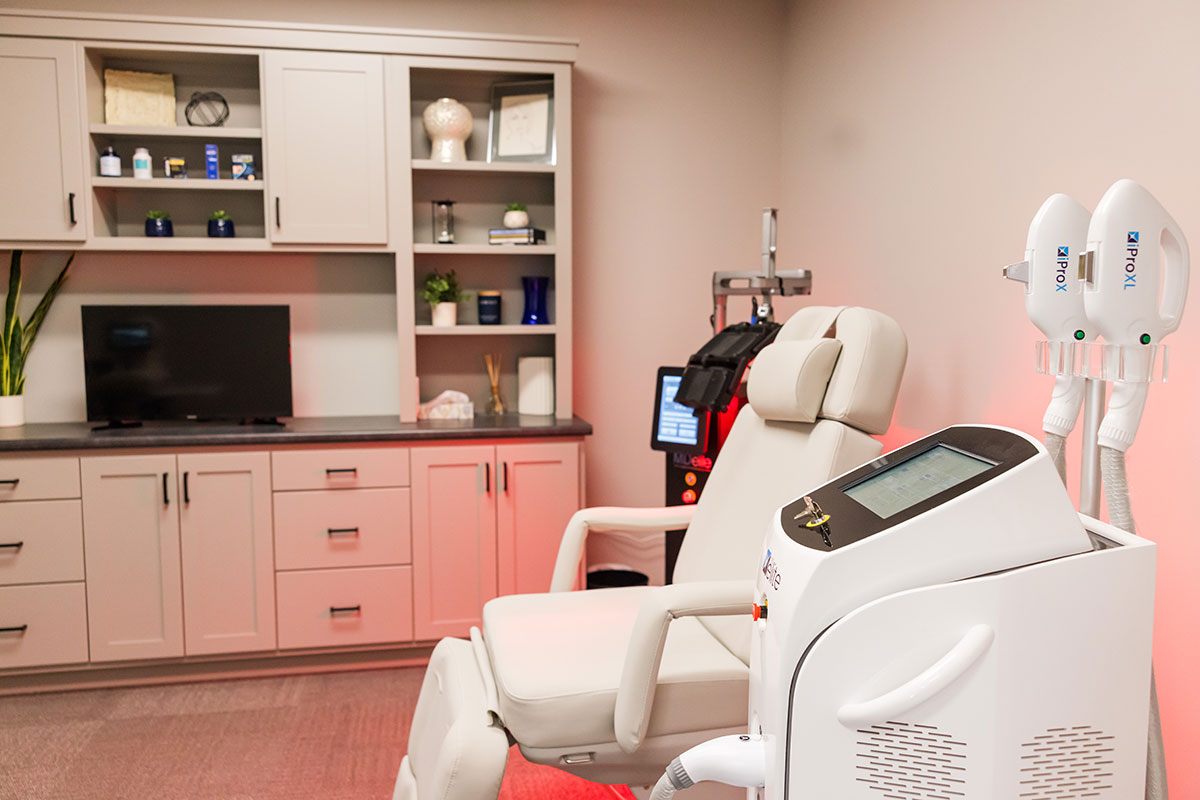
Using the cutting-edge MDElite device, we are proud to offer advanced treatments such as intense pulsed light (IPL) and low-level light therapy (LLLT).
Chronic dry eye rarely resolves on its own, but these therapies can treat a leading cause: meibomian gland dysfunction. IPL and LLLT can unclog blocked meibomian glands in your eyelids, stabilizing the tear film and providing long-lasting relief from dryness and irritation.
The treatment is very comfortable and requires no downtime, meaning you can return to your daily routine immediately afterward.

Amniotic membranes
When your cornea gets damaged, it can lead to persistent dryness, irritation, and discomfort. Amniotic membrane therapy uses natural tissue to help your eyes recover and heal.
The therapy takes advantage of the amniotic membrane’s healing properties. When placed on the eye’s surface, it supports the growth of healthy tissue and repairs any existing damage.
Amniotic membranes can be a good solution for chronic dry eye that doesn’t respond to conventional treatment options, such as eye drops and home remedies.
Medicated drops
Medicated drops can be an effective way to tackle dry eye symptoms right at the source. These prescription drops are tailored to your specific needs, reducing inflammation and enhancing tear production. By addressing the underlying causes of dry eye, these drops help restore natural moisture and improve visual comfort.
Scleral contact lenses
If contact lenses leave your eyes feeling dry and gritty, you may need a different type of lens, such as scleral lenses. Scleral contact lenses are large, rigid contact lenses that create a tear-filled cushion over your cornea. This design not only helps you see clearly but also keeps your eyes continuously hydrated, offering relief from dry eye symptoms.
Visit our dry eye doctors
If you’ve tried various treatments for dry eye and are still experiencing discomfort, our team of dry eye specialists can help. Primary EyeCare Associates provides dry eye care for patients in Sidney, Fort Loramie, Troy, and the surrounding areas. Book your appointment today and find the best solution for your dry eye symptoms.
Frequently asked questions about dry eye
How long does dry eye last?
Dry eye can be temporary for some people, especially if it’s caused by seasonal allergies, screen fatigue, or certain environments. However, for many patients, dry eye is a chronic condition that persists or comes and goes over time. With the right treatment plan, our eye doctors can help control symptoms and significantly improve eye comfort and eye health.
When should I seek medical attention for my dry eyes?
You should schedule an eye exam if dry eye symptoms are frequent, persistent, or starting to interfere with your daily life. This includes discomfort that doesn’t improve with over-the-counter drops, blurry or fluctuating vision, eye pain, or difficulty wearing contact lenses.
If your eyes feel consistently irritated or inflamed, it’s important to have the underlying cause evaluated rather than just managing symptoms.
Can dry eye be cured permanently?
In many cases, dry eye cannot be cured permanently, especially if it is related to aging, hormones, or chronic conditions like meibomian gland dysfunction. However, it can often be managed very effectively. By treating the root cause rather than just the symptoms, many patients experience long-term relief and much more stable eye comfort.
What is the difference between over-the-counter drops and the treatments you provide?
Over-the-counter artificial tears mainly work by temporarily lubricating the surface of the eye. They can be helpful for mild or occasional dryness, but they don’t address the underlying cause.
At Primary EyeCare Associates, our treatments are designed to target the underlying cause of dry eye. For example, we may use prescription medicated drops to reduce inflammation and improve tear production, or in-office treatments like IPL and LLLT to help restore normal oil gland function. We also offer options like scleral lenses and amniotic membranes for more advanced or chronic cases.