
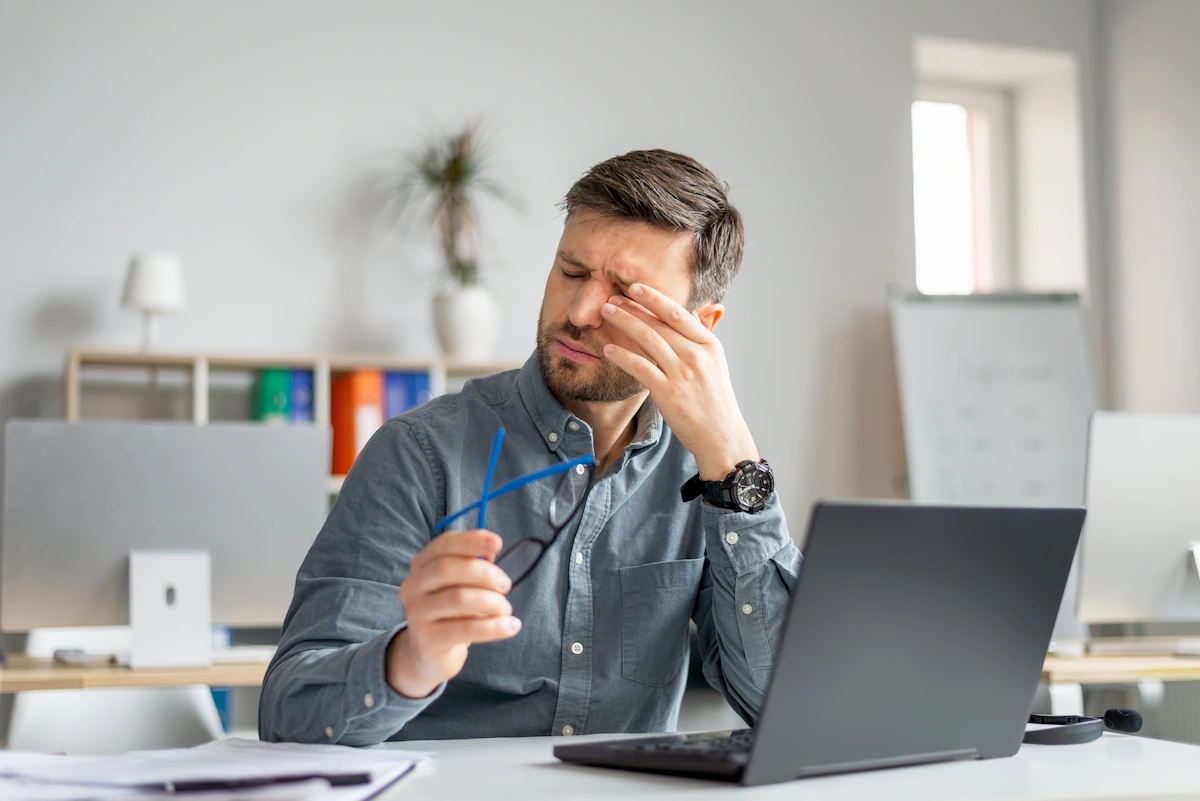
After a full workday of emails, video calls, spreadsheets, and scrolling, it is common for your eyes to feel dry, tired, blurry, or irritated. Screen time does not directly cause dry eye, but it can make existing symptoms much more noticeable. If discomfort keeps returning after work, dry eye treatment may help uncover what is driving your symptoms.
Why does screen time make dry eye worse?
When you focus on a screen, you naturally blink less often and may not blink completely. Blinking spreads tears evenly across the surface of the eye, helping keep vision clear and eyes comfortable. Fewer or incomplete blinks allow tears to evaporate more quickly.
Screen use can also contribute to dry eye because:
- Concentrated work can make you go long stretches without looking away
- Air conditioning, fans, and office heating can dry the air around you
- Screen glare and an outdated prescription can increase eye strain
- Contact lenses may feel drier later in the day
- Existing tear film problems can become more obvious during close work
Dry eye can cause burning, grittiness, redness, watery eyes, fluctuating vision, and a feeling that something is in your eye. It can be frustrating when your vision seems clear in the morning but gets worse as the workday goes on.
What can you do during the workday?
Small changes can help reduce the strain that builds up while you use digital devices. Try the 20-20-20 rule: every 20 minutes, look at something at least 20 feet away for 20 seconds. This gives your eyes a brief reset and encourages more natural blinking.
Other practical habits include:
- Positioning your screen slightly below eye level
- Taking regular breaks from close-up work
- Consciously blinking fully, especially during video calls
- Avoiding direct airflow from fans or vents
- Using lubricating eye drops recommended by your eye doctor
- Staying hydrated throughout the day
These steps may improve comfort, but they may not fully resolve persistent dry eye. Symptoms can also be tied to tear quality, eyelid inflammation, contact lens fit, medication use, or an underlying eye health concern.
When are dry eye symptoms more than screen fatigue?
Occasional tired eyes after a long day are common. However, ongoing dryness, irritation, blurred vision, or frequent watering may be a sign that your eyes need more than a quick break from the screen.
If eye drops provide only short-term relief, there may be an underlying cause that needs attention. Dry eyes that continue even after using eye drops can be a sign that your tear film is not functioning as it should.
Screen time may be the trigger you notice, but it is not always the whole story. An eye doctor can evaluate your eye surface, tear production, eyelids, vision needs, and daily habits to create a treatment plan that fits you.
Get more comfortable at work and beyond
You should not have to accept burning, blurry, or gritty eyes as part of your workday. Our eye doctors offer personalized dry eye care, including in-office procedures, prescription eye drops, and other options aimed at treating the root cause of chronic symptoms.
If your eyes feel worse after work day after day, schedule an appointment to find lasting relief.