
If dry eye symptoms keep returning despite artificial tears and at-home care, it may be time to look at the cause. For some patients, dry eye is connected to meibomian gland dysfunction (MGD), a condition that affects the oily layer of the tear film.
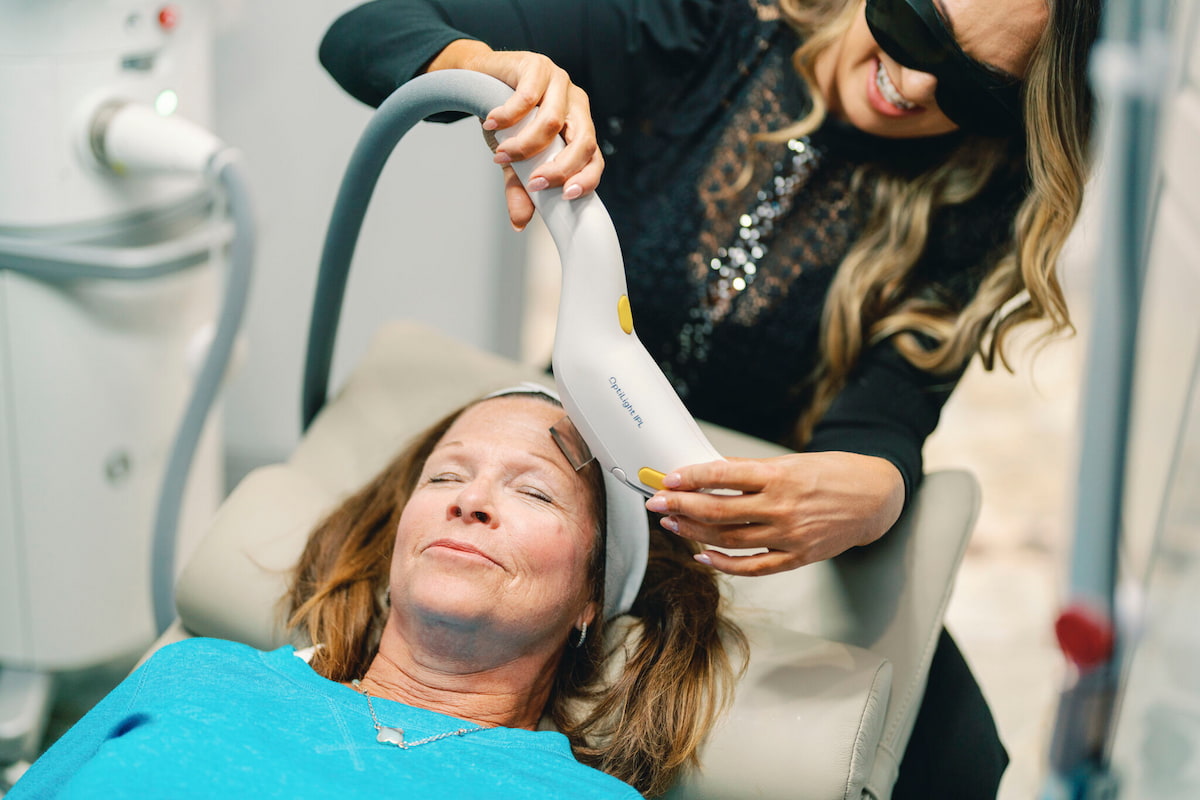
Dry eye treatment may include intense pulsed light (IPL) and low-level light therapy (LLLT). These in-office treatments are designed to support healthier meibomian gland function and improve tear stability.
Why are the meibomian glands important?
Your tears need a healthy oil layer to slow evaporation and keep the eye’s surface comfortable. Meibomian glands along the eyelids produce that oil.
When the glands become blocked or are not working well, tears can evaporate too quickly. This may lead to:
- Burning, grittiness, or redness
- Excessive watering
- Fluctuating or blurry vision
- Dryness that worsens during screen time
- Contact lens discomfort later in the day
IPL and LLLT may be considered when MGD is contributing to these symptoms. They are not the right choice for every type of dry eye, so an evaluation comes first.
What happens before treatment?
A dry eye evaluation looks beyond how dry your eyes feel. Your eye doctor may assess:
- Eyelid and meibomian gland health
- Tear production and tear evaporation
- The surface of your eyes
- Contact lens use, medications, allergies, and overall health
- Lifestyle factors, including screen use and your work environment
These findings help determine whether IPL and LLLT fit your needs. Depending on the cause of your symptoms, other options may include medicated drops, at-home care, amniotic membranes, or scleral lenses.
What happens during IPL treatment?
IPL is performed on the skin around the eyes — not directly on the eye’s surface.
First, protective eye shields are placed and a cooling gel is applied around the eyelids. While you sit comfortably, controlled pulses of light are delivered to the treatment area.
Patients may notice:
- Brief warmth
- A light snapping sensation with each pulse
- Little to no discomfort
The treatment is designed to be comfortable and noninvasive.
What happens during LLLT treatment?
LLLT is also performed externally. You will wear protective goggles and relax while gentle light therapy is applied around the eyelid area.
Unlike IPL, LLLT does not involve a series of light pulses. It is generally a quiet, hands-off part of the visit intended to support the eyelids and meibomian glands.
Neither treatment requires downtime, so you can return to your normal routine afterward.
What should you expect after treatment?
Dry eye is often chronic, particularly when it is related to MGD, aging, hormonal changes, medication use, or certain health conditions. IPL and LLLT are not a quick fix for every patient. They may be part of a longer-term plan to improve gland function and help the tear film work more effectively.
Some patients notice improved comfort over time, while others need a series of treatments and additional therapies. Follow-up visits allow your eye doctor to monitor your response and adjust your care as needed.
Find the right next step for dry eye
You do not have to keep cycling through eye drops or push through burning, tired, blurry eyes. If dry eye is affecting your work, screen time, contact lens comfort, or daily routine, schedule an appointment to find the cause and discuss the treatment options that may help.